How to Automate Payroll Process Using HRMS
The process of automate payroll is considered one of the […]
- admin
- June 11, 2026
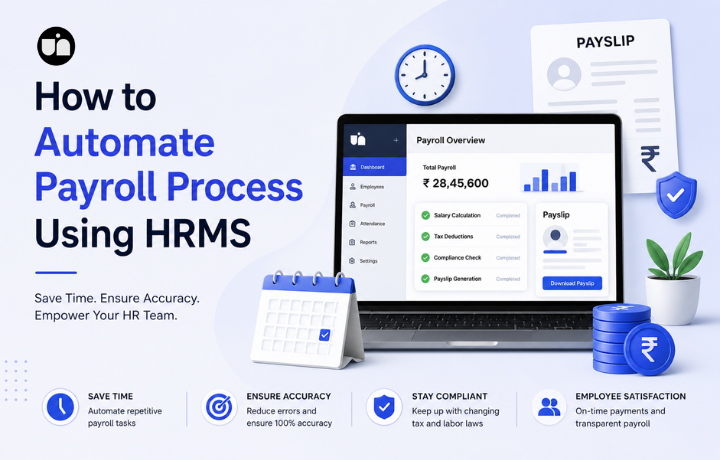
The process of automate payroll is considered one of the crucial functions within any human resources management department. Employees rely on the timely payment of accurate salaries; however, this process may take much time and result in multiple errors if performed manually. As the company grows, payroll becomes more complicated due to the need to consider such factors as attendance, bonuses, leaves, etc.
Here comes into play the importance of having payroll processing software.
With efficient payroll processing software, all these tasks become easy, automatic, and time-saving.
What is Payroll Automation?
The definition of automated payroll means calculating salaries, taxes, bonuses, incentives, and other employee benefits by making use of technological systems.
This is an alternative to using manual spreadsheet calculation methods where companies can use payroll management software to control their payroll.
Manual Payroll vs Automated Payroll
| Feature | Manual Payroll | Automated Payroll |
| Salary Processing | Manual Calculations | Automatic Calculations |
| Attendance Integration | Separate Process | Direct Integration |
| Error Risk | High | Low |
| Compliance Updates | Manual Tracking | Automated Updates |
| Processing Time | Several Hours or Days | Few Minutes |
| Reporting | Limited | Real-Time Reports |
Why Businesses Are Automating Payroll
There are various factors that make up payroll. The HR department must keep records of attendance, leaves, overtime, bonuses, deductions, taxation, and other requirements. This may create difficulties while trying to manage everything manually.
Using an efficient HR payroll management software will simplify all these tasks.
Common Payroll Challenges
| Challenge | Impact |
| Manual Data Entry | Increased errors |
| Attendance Mismatches | Incorrect salary calculations |
| Compliance Complexity | Legal risks |
| Delayed Processing | Employee dissatisfaction |
| Multiple Data Sources | Reduced efficiency |
Payroll automation helps eliminate these challenges and improves overall HR operations.
How to Automate Payroll Process Using HRMS
With the use of contemporary payroll management software, organizations are able to automate the whole payroll process.
Step 1: Centralize Employee Data
Keep all employee information, salary structures, attendance data, leaves, and perks in one place.
This prevents duplication of work and increases accuracy.
Step 2: Integrating Attendance and Leaves
Link attendance management with the payroll system along with the leaves.
It helps the software to calculate all working days, leave adjustments, overtime, and attendance-related data.
Step 3: Setting Up Payroll Rules
Set rules for salary structure and payroll policies only once.
The system can automatically calculate:
- Basic Salary
- HRA
- Conveyance Allowance
- Bonuses
- Incentives
- Overtime
- Tax Deductions
- Statutory Contributions
Step 4: Automate Compliance Management
A modern payroll management system keeps tax rules and compliance requirements updated.
This reduces legal risks and ensures accurate payroll processing every month.
Step 5: Generate Payroll Automatically
Once attendance and salary data are available, payroll can be processed automatically within minutes.
Step 6: Provide Employee Self-Service Access
Employees can access payslips, tax declarations, salary records, and investment details through self-service portals.
This reduces dependency on HR teams.
Benefits of Automating Payroll with HRMS
Payroll automation provides several advantages for both businesses and employees.
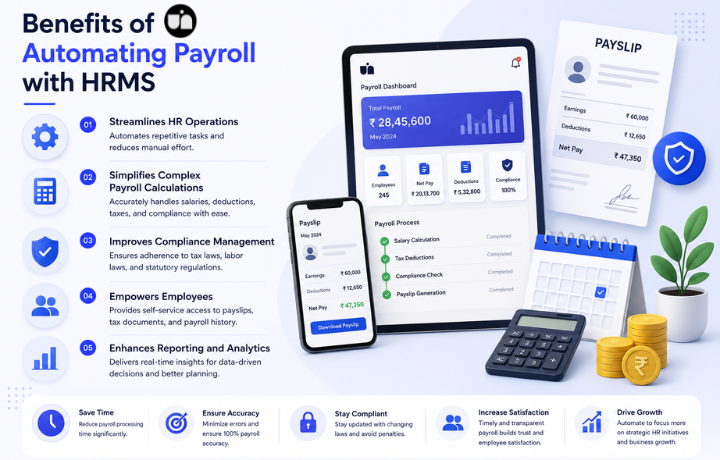
1. Streamlines HR Operations
Automate payroll is often one of the most time-consuming HR functions.
A good HRMS creates standardized workflows and automates repetitive tasks.
Benefits
- Reduces manual work significantly.
- Improves process consistency.
- Creates standardized payroll workflows.
- Helps HR teams focus on strategic tasks.
2. Simplifies Complex Payroll Calculations
Payroll involves multiple calculations and compliance requirements.
Manual calculations increase the risk of mistakes.
Benefits
- Automatically calculates salaries and deductions.
- Handles overtime and incentives accurately.
- Reduces payroll errors.
- Speeds up monthly payroll processing.
Example Comparison
| Task | Manual Process | Automated Process |
| Salary Calculation | Time Consuming | Instant |
| Overtime Calculation | Manual | Automated |
| Tax Deductions | Manual | Automatic |
| Payslip Generation | Manual | Instant |
3. Improves Compliance Management
Compliance requirements frequently change.
Keeping up with tax regulations and statutory requirements can be challenging.
Benefits
- Automatically applies updated compliance rules.
- Reduces compliance-related errors.
- Improves audit readiness.
- Minimizes legal and financial risks.
Compliance Areas Covered
| Compliance Area | Managed Through HRMS |
| Tax Deductions | ✔ |
| PF Calculations | ✔ |
| ESI Management | ✔ |
| Salary Compliance | ✔ |
| Employee Records | ✔ |
4. Empowers Employees
Modern HR payroll software provides employee self-service portals.
Employees can access payroll information without contacting HR.
Benefits
- Easy access to payslips.
- View tax information anytime.
- Update personal details independently.
- Access salary history instantly.
This improves employee satisfaction and saves HR time.
5. Enhances Reporting and Analytics
Payroll data contains valuable business insights.
A modern payroll management system software can generate reports instantly.
Benefits
- Monitor labor costs.
- Track overtime expenses.
- Analyze payroll trends.
- Improve budgeting decisions.
- Support workforce planning.
Sample Payroll Insights
| Report Type | Business Benefit |
| Salary Report | Payroll visibility |
| Overtime Report | Cost control |
| Tax Report | Compliance tracking |
| Department Cost Report | Better budgeting |
Important Considerations Before Implementing Payroll Automation
Before choosing the best payroll management software, businesses should evaluate several important factors.
System Integration
The software should integrate smoothly with:
- Attendance systems.
- Leave management software.
- HR systems.
- Accounting platforms.
Data Security
Payroll contains sensitive employee information.
Choose a solution with:
- Data encryption.
- Access controls.
- Secure cloud storage.
- Compliance protections.
User Training
Employees and HR teams should receive proper training to maximize system benefits.
Scalability
The software should support future business growth and workforce expansion.
Cost and ROI
Evaluate the implementation cost against expected benefits such as:
- Reduced processing time.
- Lower error rates.
- Better compliance.
- Increased productivity.
Features to Look for in the Best Payroll Management Software
Essential Features
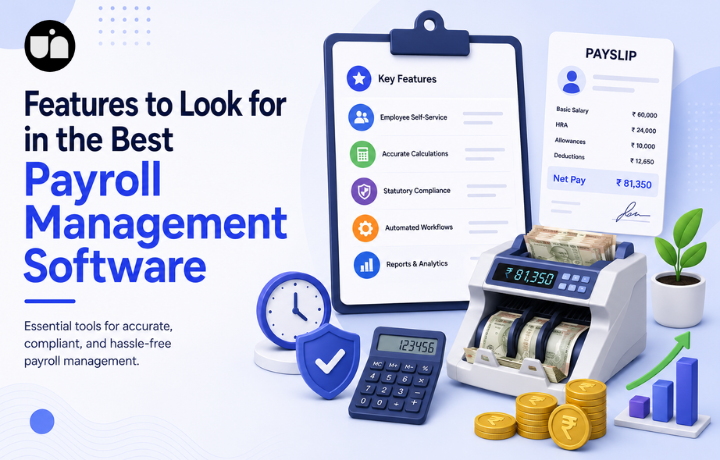
- Automated salary processing and payroll calculations.
- Attendance and leave integration for accurate payroll management.
- Compliance management and statutory updates.
- Employee self-service portals for payroll access.
- Real-time payroll reports and analytics.
- Multi-location payroll support for growing businesses.
- Secure employee data management and access control.
- Easy integration with HR and accounting systems.
Signs Your Business Needs Payroll Automation
Your organization may need a modern payroll solution if:
- Payroll processing takes several days each month.
- Salary calculation errors occur frequently.
- Compliance management is becoming difficult.
- HR teams spend excessive time on payroll tasks.
- Employees regularly raise payroll-related concerns.
- Payroll reports are difficult to generate.
These signs indicate it may be time to invest in the best payroll management software.
How Unirr Can Automate Payroll Process Using HRMS
Payroll management is one of the most vital processes that any organization must consider. The more an organization expands, the harder it gets for companies to handle their payroll manually. Manual payroll systems can create issues such as calculation errors, late payment of salaries, compliance problems, and additional administrative burdens.
Unirr HRMS is here to solve this problem for you. Using Unirr, your company will get help with automation of all your payroll processes. Through Unirr, you can benefit from all your payroll management processes being automated and much easier than before.
Why Businesses Choose Unirr for Payroll Automation
| Unirr Feature | Business Benefit |
| Automated Payroll Processing | Faster salary calculations |
| Attendance Integration | Accurate payroll data |
| Compliance Management | Reduced compliance risks |
| Employee Self-Service | Less HR dependency |
| Payroll Reports | Better decision-making |
| Centralized HRMS | Improved operational efficiency |
Using Unirr HRMS, organizations will benefit from streamlined processes, accuracy in processing, compliance with relevant legislation, and payment of employees in a timely manner.
Conclusion
In today’s world, automation in processing payrolls is not a choice but a necessity for organizations. This technology has now become necessary for those companies that wish to improve their operational efficiency, minimize mistakes, and ensure that they remain compliant in all aspects. The ideal payroll management software will offer automation for tasks such as salary calculations, attendance recording, deductions, compliance updates, and reports. The ideal payroll management software will be one that will offer a lot of savings and will even help improve employee satisfaction and HR productivity.